Mammography teleradiology: MQSA audit and contract readiness
Prepare for MQSA inspections with mammography teleradiology requirements, credentialing, display and QC standards, plus contract terms for remote reads.
Mammography teleradiology requirements start with the Mammography Quality Standards Act (MQSA), which sets the federal baseline every facility must meet regardless of whether the interpreting physician sits on-site or reads remotely. Compliant telemammography depends on accredited and certified facility status, qualified interpreting physicians, annual medical physicist surveys, 5 megapixel diagnostic displays, documented quality assurance (QA) records, and secure image transmission under a signed business associate agreement (BAA). We are a US teleradiology service that delivers final signed reports read by board-certified subspecialists. The sections below walk through the regulatory detail, the personnel and equipment thresholds, and an inspection-ready checklist your team can use before assigning a single remote read.
Key facts:
- The 2023 MQSA Final Rule became enforceable on September 10, 2024, and added breast density notification language to every mammography report.
- Continuing experience for interpreting physicians commonly requires 960 mammogram interpretations over 24 months, along with Category 1 continuing medical education (CME) credits.
- Professional guidance and recent literature recommend a minimum 5 megapixel diagnostic display for mammographic interpretation, including remote reading workstations.
- During MQSA inspections, the FDA expects personnel records, QC test data, and corrective-action documentation to be available on demand.
- FDA Alternative Standard #13 permits trained technologists at remote mobile sites to capture artifact and phantom images for later physicist evaluation, under documented conditions.
TL;DR:
- The facility remains the MQSA certificate holder and must produce remote reader credentials, workstation quality control logs, and corrective action records during inspection.
- Remote interpreting physicians generally need 960 mammogram interpretations within 24 months, plus Category 1 CME credits tracked for each modality they read.
- Each remote diagnostic display should meet the 5 megapixel recommendation and pass medical physicist acceptance testing, with calibration and retesting records retained per workstation.
- Since September 10, 2024, mammography reports must identify the certificate holder facility, and patient summaries must include updated breast density notification language.
- Before go live, require a signed BAA, active state licenses for assigned radiologists, direct DICOM delivery into PACS, and documented end to end testing.
Table of Contents
- What does MQSA require of facilities that use remote mammography reading?
- What qualifications do interpreting physicians and medical physicists need?
- What equipment and display specs apply to remote mammography reading?
- How often is QC testing required, and who performs the annual survey?
- How should facilities organize documentation for an MQSA audit?
- How do facilities set up a compliant remote mammography workflow?
- What should a facility confirm before assigning its first remote mammography read?
- Where AstraRad fits your telemammography compliance needs
- FAQ
- Sources
What does MQSA require of facilities that use remote mammography reading?
MQSA is the federal law that sets minimum quality standards for every facility performing mammography in the United States, and it applies whether the interpreting radiologist works on-site or off-site. The law does not create a separate, lighter standard for teleradiology: a remote reading arrangement must satisfy the same accreditation, certification, personnel, and equipment obligations as an in-house radiology department.
The regulatory structure sits in 21 CFR Part 900. Section 900.4 governs facility certification, requiring a current FDA certificate issued after accreditation by an approved body such as the American College of Radiology (ACR) or a state accrediting agency. Section 900.12 lays out the quality standards themselves: personnel qualifications, equipment requirements, the QA program, and recordkeeping. A facility that contracts with a remote reading service still holds the certificate, so it still owns every obligation tied to it.
The 2023 MQSA Final Rule updated several of these obligations in ways that matter for telemammography specifically. The rule was issued on March 10, 2023, and its amendments became enforceable on September 10, 2024. It requires mammography reports to include the facility's name and location in a way that is traceable to the certificate holder, which matters when a remote radiologist signs a report for a facility they have never physically visited. It also mandates breast density notification language in the patient lay summary, standardizing what had previously varied by state.
Facility responsibility does not transfer to the reading vendor. Your facility's MQSA certificate is the one an inspector checks, and your facility is the one that must produce personnel files, QC logs, and corrective-action records during an inspection, even when a remote radiologist performed the interpretation. A vendor can supply credentialing evidence and QC documentation to support that inspection, but the legal burden stays with the certificate holder.
Several MQSA provisions apply directly to remote reading arrangements:
- Report content and identifiers: every report, including those signed off-site, must carry facility identification that satisfies the 2023 rule's traceability requirements.
- Breast density notification: the patient lay summary must include the updated notification language regardless of where the interpreting physician is located.
- QC data retention: quality control records for any off-site equipment used in the clinical workflow, including display workstations, must be retained the same way as on-site equipment records.
- Inspection access: facilities must be able to produce remote reader credentialing and QC evidence during a routine MQSA inspection, not just on-site equipment logs.
What qualifications do interpreting physicians and medical physicists need?
Interpreting physicians, technologists, and medical physicists each face specific MQSA and ACR qualification thresholds that apply whether they work in your building or read from another state. An interpreting physician is a radiologist who meets MQSA's initial and continuing experience requirements and is permitted to sign mammography reports.
Initial qualification requires specific training hours and supervised interpretation experience before a radiologist can read mammograms independently. Continuing qualification is the threshold most procurement teams need to verify for remote readers: physicians commonly must interpret 960 mammography exams over a rolling 24 month period, along with a specified count of Category 1 CME credits, including credits tied to any newer modality such as digital breast tomosynthesis (DBT) the physician interprets.
Technologists and medical physicists carry their own thresholds. Technologists must document initial training and a minimum number of supervised mammography exams before performing studies independently, and they need separate documented training for each modality in use, including DBT. Medical physicists are responsible for the annual equipment survey and for evaluating any new unit, including remote display workstations, before clinical use.
For physicians reading across multiple sites, which is the normal pattern in a teleradiology arrangement, acceptable evidence usually takes the form of site-signed letters or interpretation volume tables that attribute reads to each facility. Inspectors can request this documentation with very little notice, so a physician's continuing experience record needs to be assembled before the inspection date, not during it.
- Initial qualification: documented training hours plus supervised interpretation volume before independent reading begins.
- Continuing experience: interpretation of 960 mammograms within 24 months for most interpreting physicians.
- CME: Category 1 credits tracked separately for each modality the physician interprets.
- Multi-site evidence: site-signed letters or interpretation tables attributing exam counts to each facility.
Pro Tip: Keep a single digital folder per interpreting physician with CME certificates, site-signed volume letters, and license copies, refreshed quarterly so it is inspection-ready without a scramble.
What equipment and display specs apply to remote mammography reading?
Remote mammography reading requires the same diagnostic-quality display and equipment standards as on-site reading, with the added step of documenting that off-site workstations meet those standards. A diagnostic display, in this context, is a monitor validated for the luminance, resolution, and calibration needed to detect subtle findings like microcalcifications.
Professional teleradiology guidance and recent literature point to a minimum 5 megapixel display for mammographic interpretation, a standard that applies to remote reading workstations as much as to on-site reading rooms. The same source notes that display acceptance and ongoing quality control should be performed by a medical physicist, not simply assumed from manufacturer specifications. A workstation that has never been through physicist acceptance testing is a gap an inspector will flag quickly, because the display is the single piece of equipment most directly tied to diagnostic accuracy.
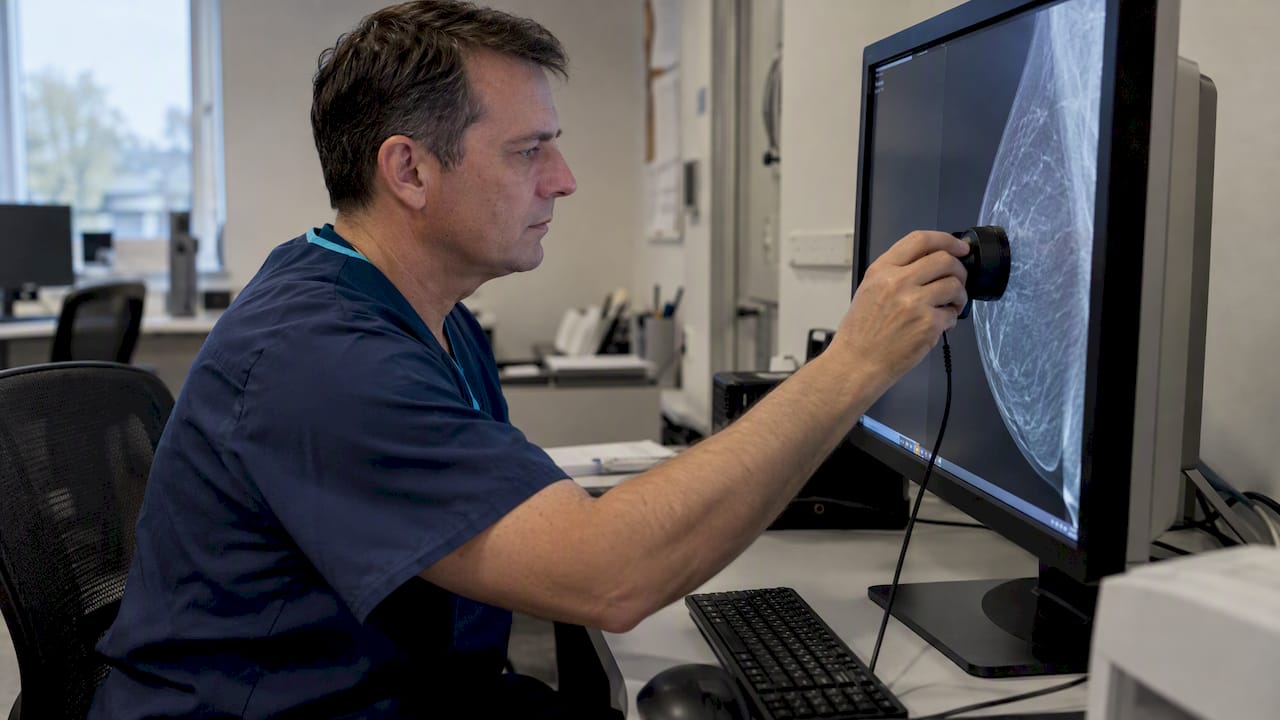
DICOM conformity and PACS integration matter operationally as well as technically. Images need to move from your acquisition modality through a DICOM-conformant pathway to the remote radiologist, and the signed report needs to return into your existing picture archiving and communication system (PACS) without routing through a separate portal that creates an extra point of failure or an extra place for records to go missing during an inspection.
FDA device authorization is the other piece facilities sometimes overlook. Mammography units and associated display hardware must carry FDA authorization for their intended mammography use, and a remote reading arrangement does not change that requirement. Using a general-purpose monitor that has not been authorized or validated for mammographic interpretation creates a compliance exposure independent of who is reading the images.
- Displays: minimum 5 megapixel resolution with physicist-documented acceptance testing before clinical use.
- Integration: DICOM-conformant transmission and direct PACS delivery of final signed reports.
- Device authorization: only FDA-authorized equipment for its intended mammography use, including remote-site displays.
- Recordkeeping: calibration logs and periodic re-testing schedules maintained per workstation, not just per facility.
How often is QC testing required, and who performs the annual survey?
Facilities performing mammography must run a defined schedule of quality control tests, most on a weekly basis, with a medical physicist conducting a comprehensive annual survey of every unit and processor used clinically. A medical physicist, in this context, is a professional qualified under MQSA to evaluate mammography equipment performance and radiation dose.
The routine schedule under 21 CFR 900.12(e) includes several recurring checks:
- Phantom image quality tests, performed weekly to confirm image quality has not degraded.
- Sensitometric tests, verifying that film or digital processing stays within acceptable density ranges.
- System artifact evaluations, catching equipment-introduced defects before they affect diagnostic images.
- Dose determinations, required periodically to confirm radiation output stays within MQSA limits.
The annual medical physicist survey is the anchor event in this schedule, and it must cover every clinically used processor, including any processor at a remote or satellite site. There is no standing exemption for equipment simply because it sits outside the main facility.
One exception exists for remote and mobile sites processing film. FDA Alternative Standard #13 permits a trained technologist, rather than the physicist in person, to capture system artifact films and phantom images at a remote mobile site, with the physicist evaluating the results afterward. Using this alternative still requires documented technologist training and periodic direct physicist evaluation, so it reduces travel burden without removing physicist oversight.
Record retention matters as much as the testing itself. QC test results and corrective-action documentation generally need to be kept until the next MQSA inspection or for a set number of subsequent test cycles, whichever your accrediting body specifies, so that an inspector can trace a corrected problem across its full resolution history rather than seeing only the fix.
How should facilities organize documentation for an MQSA audit?
Facilities preparing for an MQSA audit should centralize personnel files, QC logs, equipment evaluations, and corrective-action records into one retrievable location well before an inspector arrives. An MQSA inspection, in this context, is the periodic federal or state-delegated review confirming a certified facility still meets MQSA's personnel, equipment, and QA requirements.
FDA guidance on annual inspections lists the categories inspectors most commonly request:
- Personnel qualification files for every interpreting physician, technologist, and medical physicist, including continuing experience evidence.
- QC logs covering the full required testing schedule, not just the most recent cycle.
- Equipment evaluations and acceptance testing records for every unit and display workstation in clinical use.
- Corrective-action reports documenting how any identified problem was resolved and verified.
- Patient lay summary templates showing current breast density notification language.
A practical approach is a centralized digital repository, indexed by document type and date, with signed originals scanned and searchable rather than scattered across departmental drives. Retention timing should follow your accrediting body's rule, generally through the next inspection cycle or a specified number of test cycles beyond that.
Vendor contracts should include explicit clauses requiring timely delivery of credentialing evidence and QC or test documentation whenever your facility faces an inspection, since the facility carries the compliance burden even when a remote radiologist performed the read.
Pro Tip: Build a standing "inspection packet" you can assemble within five days, since many inspectors allow that window for supplemental documentation but will still issue a Level 3 citation if nothing is on hand at the start of the inspection.
How do facilities set up a compliant remote mammography workflow?
A compliant remote mammography workflow depends on direct PACS integration, a signed BAA covering data handling, and confirmed state licensing for every interpreting radiologist assigned to your studies. PACS integration, in this context, means images and signed reports move directly into your existing system without routing through a separate vendor portal.
On the technical side, procurement checklists should confirm direct DICOM push into the facility's PACS, audit logging of every image transfer and report signature, and documented technical acceptance testing before go-live. AstraRad's workflow delivers final signed reports straight into a client's existing PACS, DICOM conformant, with no added portal step.
On the compliance side, contracts should spell out business associate obligations in writing and require the vendor to produce audit trails on request. We work as a business associate under a signed BAA and are HIPAA aligned.
State licensing is the third pillar: every interpreting radiologist needs an active license in the state where your facility operates, documented and ready for inspector review. AstraRad's radiologists are licensed in all 50 states, with state-specific coverage pages available for procurement review, including Colorado-specific licensing detail.
| Contract deliverable | Regulatory need it supports |
|---|---|
| Direct DICOM push to client PACS | Avoids extra transmission points that complicate QC and audit trails |
| Signed BAA | Documents data-handling obligations for inspector and patient-privacy review |
| State-by-state radiologist licensing records | Confirms interpreting physician authority to read for your facility's location |
| Written coverage plan with SLA terms | Gives procurement a contractual basis for turnaround expectations |
AstraRad's telemammography service is built around MQSA-qualified reads, with final signed reports delivered at every tier, including overnight.
What should a facility confirm before assigning its first remote mammography read?
Facilities should complete a short internal sign-off confirming certification, personnel documentation, equipment QC, and contract terms before routing a single study to a remote reader. A sign-off checklist, in this context, is an internal confirmation step procurement and compliance teams use ahead of a go-live date.
- Confirm the facility's MQSA certification and accreditation status are current and the certificate is visible to staff and inspectors.
- Assemble interpreting physician qualification files, CME records, and continuing experience documentation, with site-signed letters where physicians read for multiple facilities.
- Verify acceptance testing and ongoing QC logs exist for every remote reading display and every processor in clinical use, including any site using FDA Alternative Standard #13.
- Confirm the vendor contract includes a signed BAA, a written coverage plan with SLA terms, per-report pricing with no minimums, and committed PACS and DICOM integration.
- Walk through one test case end to end, from image acquisition to signed report delivery, confirming the report lands in your PACS with correct facility identifiers and breast density language.
Treat this checklist as a recurring procurement step, not a one-time exercise, since personnel qualifications, CME counts, and equipment QC schedules all require periodic refresh.
Where AstraRad fits your telemammography compliance needs
We are a US teleradiology service that delivers final signed reports read by board-certified subspecialists. For telemammography specifically, that means interpreting physicians matched to breast imaging, licensed in all 50 states, reading on scheduled US shifts with every read performed inside the United States.
- Final signed reports at every tier, including STAT, routine, and stroke protocol, committed by contract and measured from last-image arrival to signature.
- Direct delivery into your existing PACS, DICOM conformant, with no added vendor portal.
- Business associate status under a signed BAA, with HIPAA-aligned data handling built into the workflow.
- Per-report pricing with no minimums, so a coverage plan scales with actual study volume rather than a flat subscription.
To request a per-report rate card or discuss a written coverage plan with SLA terms for your facility, visit our telemammography service page or book a discovery call.
This article is general information, not a substitute for advice from a qualified doctor. Consult a qualified healthcare professional about your own circumstances before acting on anything here.
FAQ
What are the 2026 guidelines for mammograms?
There is no separate 2026-specific MQSA rule; the governing standard remains the 2023 MQSA Final Rule, which became enforceable on September 10, 2024, and still applies through 2026. Facilities should continue following its report content and breast density notification requirements rather than anticipating a new rule cycle.
What are the FDA requirements for mammography services?
The FDA requires every mammography facility to hold current accreditation and certification under MQSA, meet personnel qualification standards for interpreting physicians, technologists, and medical physicists, and maintain documented equipment quality control, as outlined in 21 CFR Part 900. These requirements apply equally to facilities using remote interpretation.
How to get into teleradiology?
Entering teleradiology as a radiologist typically requires board certification, state medical licensure in each state you intend to read for, and, for mammography specifically, meeting MQSA's interpreting physician qualification and continuing experience thresholds. Facilities and groups usually verify these credentials directly before assigning remote reading privileges.
What equipment do I need for compliant remote mammography reading?
A compliant remote mammography workstation needs a diagnostic display meeting the 5 megapixel minimum recommended in professional teleradiology guidance, with physicist-documented acceptance testing, plus a DICOM-conformant connection into the facility's PACS. FDA-authorized equipment is required for its intended mammography use, regardless of where the interpreting physician sits.
What records does an MQSA inspector usually ask for?
FDA guidance indicates inspectors commonly request personnel qualification files, QC test logs, equipment evaluation records, and corrective-action documentation. Facilities using remote readers should keep this documentation centralized and retrievable, since the certificate holder remains responsible even when a vendor performed the interpretation.
Sources
- Important information: Final rule to amend the Mammography Quality Standards Act (MQSA)
- Interpreting Physician: Mammography (Revised 05-22-2024) : Accreditation Support
- TSR guidelines for the practice of teleradiology: 2021 update
Recommended
Related on AstraRad
- Resources
ACR accreditation for teleradiology: facilities own QA
ACR accredits facilities, not teleradiology vendors. See how US sites manage remote read QA, credentialing, technical standards, and survey preparation.
- Resources
Radiology companies explained: the five types compared
Radiology companies come in five types: practice groups, consolidators, teleradiology, imaging center operators, and AI vendors. Who does what, mapped.
- Resources
AI radiology companies in 2026: the vendor landscape
AI radiology companies mapped by category: triage, detection, and reporting vendors, what FDA clearance actually covers, and how AI fits human reads.
Put a radiologist's name on your next read.
Tell us your modalities and monthly volume. A complete per-report rate card, with turnaround tiers and SLA terms in writing, lands in your inbox within one business day.