Priors retrieval for PACS admins
Operations first plan for hospital imaging and PACS admins to turn ACR and IHE standards into a reliable priors retrieval workflow with match rate KPIs
A priors retrieval workflow must deliver identity-aware, automated prefetch paired with hanging protocols that place prior studies and reports directly in the radiologist's viewport at the moment of read, with no manual search required. A teleradiology provider supplying final signed subspecialist reports depends on this same reliability whenever radiologists read against a client's PACS. Getting there starts with one priority above all others: patient identity reconciliation robust enough to let automation run without constant exceptions.
TL;DR:
- Ensuring robust patient identity reconciliation before retrieval is essential to prevent missed priors and reduce manual search time for radiologists.
- Using order placement triggers for prefetching and prioritizing STAT studies helps maintain quick access to relevant priors, especially during system transitions.
- Combining DICOMweb WADO‑RS with legacy C‑MOVE protocols and implementing IHE profiles like IDEP and PIX/PDQ creates a reliable, standards-based workflow for external studies.
- Regularly reviewing match rates, fallback occurrences, and mapping table accuracy is crucial to identify and fix issues before they impact radiologist reading.
- Rollout success depends on dedicated ownership of configuration, careful pilot testing, and patience during the normalization period after large workflow adjustments.
Table of Contents
- Current state and operational risks for priors retrieval
- Standards and technical building blocks behind priors retrieval
- How to build the priors retrieval sequence step by step
- Configuring hanging protocols and identity matching for reliability
- Implementation checklist and the metrics that prove success
- What surprises teams after go-live?
- How AstraRad supports priors retrieval during transitions
- Sources
- FAQ
Current state and operational risks for priors retrieval
Most imaging departments already own the technology for automated prior display. What breaks the workflow is rarely the software itself, but the data feeding it. Patient identity mismatches, studies imported from outside CDs, archives that sit outside the primary PACS, and hanging protocols built years ago for a different study mix all combine to keep priors invisible at read time.
The clinical and operational costs compound quietly:
- Radiologists spend extra minutes per case manually searching for outside studies that should have appeared automatically.
- Interval changes get missed when the correct prior exists but never surfaces in the viewer.
- Patients undergo avoidable repeat imaging when a prior cannot be located in time.
- Staff absorb the burden as a manual FTE cost rather than a one-time fix.
Timely retrieval and display of prior imaging is not optional. ACR‑AAPM‑SIIM technical standards list it as a required component of the electronic practice of medical imaging, which means a workflow that leaves priors buried in a side archive is not just inefficient, it falls short of the professional standard radiologists are expected to meet.
PACS transitions make the problem visible fast. Published analyses of PACS migrations show turnaround time commonly rises after a vendor change, often taking months to normalize as caching, mapping, and staff habits catch up to the new system.
Standards and technical building blocks behind priors retrieval
Cross-vendor priors retrieval depends on a handful of standards working together rather than any single product. DICOM Query/Retrieve, built on C‑FIND and C‑MOVE, has long handled discovery and batch retrieval between PACS nodes, and it still works reliably with legacy archives that never adopted newer protocols. DICOMweb's WADO‑RS offers a progressive alternative: series display as they arrive instead of waiting for a full batch transfer, which shortens the wait a radiologist actually experiences when pulling a large prior study from tiered storage.
IHE profiles fill the gaps DICOM alone does not cover:
- IDEP (Import and Display of External Priors) defines an importer-based pattern for discovering, retrieving, localizing, and storing outside studies so they behave like local ones.
- XDS‑I registry and repository transactions, including ITI‑18 and ITI‑43, describe how systems query a network for imaging manifests and retrieve the documents that match.
- PIX/PDQ profiles resolve patient identity across facilities, a step that has to succeed before any of the retrieval transactions above can run automatically.
HL7 order messages, typically ORM or OMI, are what usually start the whole sequence. An order placed in the RIS or EMR is the natural trigger for a prefetch job, provided the MPI has already resolved the patient's identity across every system involved. IHE's IDEP documentation frames identity reconciliation as the gating step for the entire chain.
How to build the priors retrieval sequence step by step
A dependable workflow follows a fixed sequence from the moment a study is ordered to the moment its priors are purged from cache. Each stage has a primary method and a fallback for when systems do not cooperate.
- Trigger. Use the HL7 ORM or OMI message generated when the order is placed or the appointment is booked, not the moment the technologist starts the exam.
- Discovery. Search the local archive first, resolve the patient through the EMPI, then query external registries using ITI‑18 or DICOM C‑FIND, applying relevancy rules so the system does not pull every study a patient ever had.
- Retrieval. Prefer progressive DICOMweb WADO‑RS retrieval where the source supports it, and fall back to C‑MOVE for older nodes that only speak classic DICOM.
- Localization. Reconcile the external accession number to the local accession number and MRN, using mapping tables and the HL7 order link rather than storing the study as a loose external object.
- Presentation. Apply hanging protocols that load priors into linked viewports automatically and synchronize scrolling between current and prior series.
- Post-read handling. Set purge policies for cached priors, route addenda correctly, and log every retrieval and match for audit purposes.
Pro Tip: Schedule prefetch jobs on order placement rather than patient arrival, and route them through a priority queue so STAT orders never wait behind routine batch jobs.
A published case study of an automated import and reconciliation workflow found that mapping external studies to local accession numbers and storing them in local PACS context, rather than as external objects, cut the manual FTE effort that previously slowed outside studies down and reduced how long they took to become available.
Configuring hanging protocols and identity matching for reliability
Configuration is where most priors workflows succeed or quietly fail. The two levers that matter most are how tightly hanging protocols are tuned and how well identity matching performs before a study ever reaches the viewer.
- Build hanging protocols with a matching hierarchy: exact modality and study description first, then modality plus body part, then modality alone, then a generic default as the last resort.
- Trigger prefetch on order placement, not exam start, and use priority queues so STAT studies do not sit behind routine caching jobs.
- Maintain mapping tables for legacy MRNs and cross-enterprise identifiers, and run PIX/PDQ transactions before retrieval, not after.
- Set relevancy rules for how many priors to fetch, which modalities and body parts qualify, and how far back the recency window extends.
- Review match-rate logs monthly, treating every fallback to a generic hanging protocol as a data problem to investigate rather than a display quirk to ignore.
Research on hanging protocol performance found that failures blamed on the protocol itself are frequently something else entirely: the protocol correctly requested priors, but identifier mismatches or gaps in archive indexing kept them from being found.
| Configuration area | Primary risk if neglected | Practical fix |
|---|---|---|
| Hanging protocol hierarchy | Studies fall back to generic default view | Tiered matching rules audited for fallback rate |
| Prefetch scheduling | STAT jobs delayed behind routine batches | Priority queues tied to order urgency |
| Identity reconciliation | Automation fails silently on valid priors | PIX/PDQ resolution before retrieval runs |
| Relevancy rules | Irrelevant or excessive priors clutter the viewer | Modality, body part, and recency filters |
Implementation checklist and the metrics that prove success
Treat the rollout as a project with named owners, not a background IT task. A basic checklist covers a RACI chart naming who owns MPI mapping, prefetch rules, and hanging protocol libraries, an inventory of every external source the department pulls from, a documented rollback plan, and a defined set of test cases before go-live.
- PACS administrator: owns hanging protocol libraries and archive configuration.
- RIS/EMR and integration engineer: owns HL7 triggers, MPI mapping tables, and order-to-prefetch linkage.
- Clinical lead: signs off on relevancy rules and reviews fallback cases monthly.
- Vendor contact: supports DICOMweb or C‑MOVE configuration and troubleshoots discovery failures.
Pilot on a single modality or clinic before expanding, with clear acceptance criteria: a target match rate, an acceptable retrieval latency, and a measurable turnaround time improvement. Match rate for priors at read time is the single number that tells you whether the workflow is working. IHE's IDEP materials note that moving from manual query steps to IHE-compliant import and prefetch is a key factor in meeting turnaround time commitments, precisely because it removes the manual search step from the radiologist's task list.
What surprises teams after go-live?
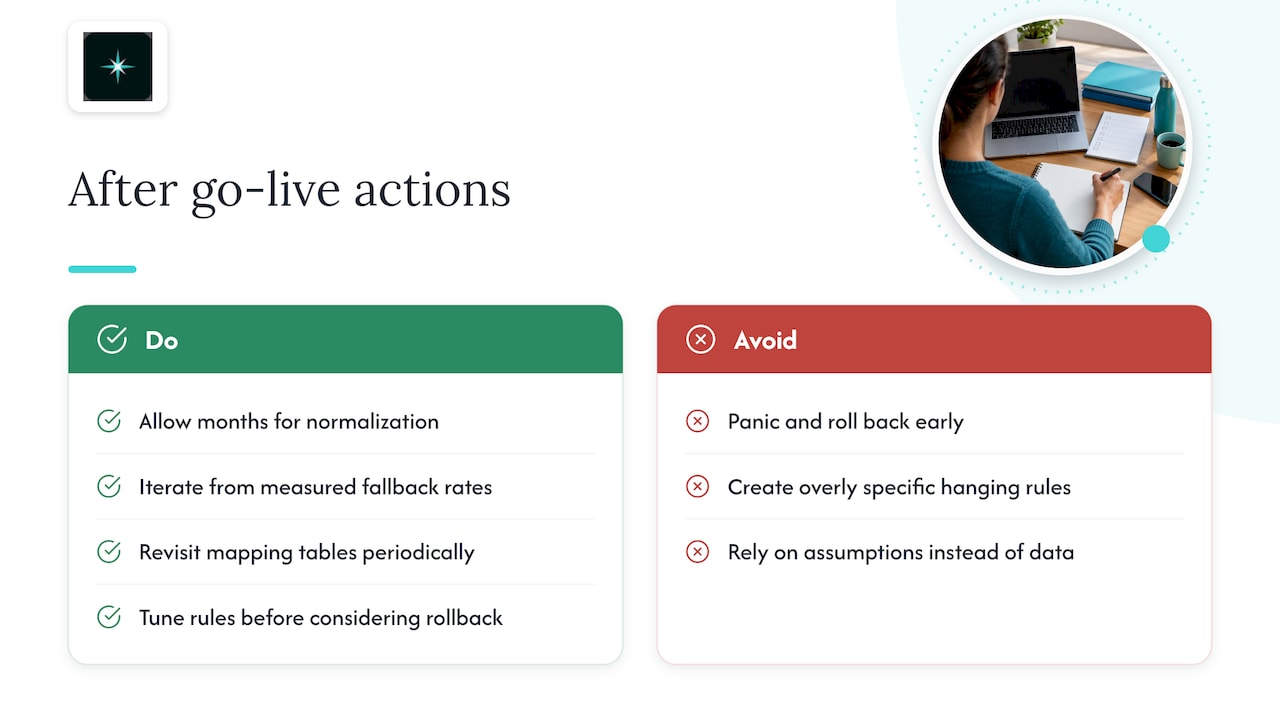
Turnaround time often gets worse before it gets better. Any major change to prefetch rules or hanging protocols disrupts cached habits, and normalization can take months rather than weeks. Teams that panic and roll back too early lose the data they need to tune the system properly.
The more common design mistake is building hanging protocol rules that are too specific, which increases fallback to generic views rather than reducing it. Iterate based on measured fallback rates, not assumptions, and revisit mapping tables and vendor behavior periodically since study descriptions and archive quirks drift over time.
Rafael Vieira
How AstraRad supports priors retrieval during transitions
Fixing a priors retrieval workflow takes months, and reading volume does not pause while the project runs. AstraRad reads directly against a client's existing PACS with no added portal, which means a department mid-migration or mid-backlog does not have to choose between fixing its infrastructure and keeping turnaround times intact.
- Radiologists matched to modality and body part read studies.
- Turnaround commitments cover STAT, urgent, and routine studies.
- Peer review and compliance reporting run on every case.
Whether the gap is a backlog while mapping tables get rebuilt or ongoing overflow during a pilot, overflow radiology reads can absorb volume without disrupting the internal fix. Review teleradiology pricing to see how per-report rates fit an interim coverage plan.
Sources
- ACR technical standards (electronic practice of medical imaging)
- IHE IDEP / Import and Display of External Priors
FAQ
What is the biggest cause of missing prior studies at read time?
Patient identity mismatches are the most common root cause, even when the hanging protocol correctly requests priors. Strengthening MPI and PIX/PDQ matching before retrieval, described in IHE's IDEP materials, resolves most of these gaps.
Should prefetch trigger on order placement or patient arrival?
Order placement gives the system more lead time to complete discovery, retrieval, and localization before the read. Triggering only at arrival risks the priors still loading when the radiologist opens the case.
How long does turnaround time take to stabilize after workflow changes?
Turnaround time commonly rises temporarily after major PACS or workflow changes, normalizing over a period of months as caching and mapping tables mature. Teams should expect this dip and track fallback rates rather than reverting the change early.
Can a teleradiology partner help while a priors workflow is being rebuilt?
Yes, a partner that reads directly against the existing PACS can absorb overflow or backlog volume without requiring a new portal. AstraRad offers this kind of interim capacity alongside guaranteed turnaround times for STAT, urgent, and routine studies.
Recommended
Related on AstraRad
- Resources
Nuclear medicine teleradiology: authorized user rules
How remote nuclear medicine reads work: where NRC authorized user rules apply, which studies route well, and the workflow differences from CT.
- Resources
Cardiac CT teleradiology for hospital admins
Hospital administrators: how cardiac CT teleradiology meets ACR/SCCT requirements, enforces SLAs, integrates with PACS, and provides subspecialist reads
- Resources
Teleradiology specialists: matching reads to your mix
How to match teleradiology specialists to your study mix: fellowship training, credential verification, and where specialist reads change outcomes.
Put a radiologist's name on your next read.
Tell us your modalities and monthly volume. A complete per-report rate card, with turnaround tiers and SLA terms in writing, lands in your inbox within one business day.